
How to Print Hijabs with a Sublimation Printer

Printed hijabs have become a popular fashion trend.
Offering the freedom to create highly customized designs, printed hijabs can be unique, feel more exclusive, and even deeply personal.
One of the technologies that makes printed hijabs possible is sublimation printing.
Sublimation printers have revolutionized hijab production by enabling quick turnaround times while maintaining high-quality designs.
The process is also relatively easy.
So, what steps are needed to ensure high-quality printed hijabs?
After reading this article, you will have a practical guide to starting your own hijab printing business.
Let’s dive in!
Preparation for Hijab Printing
Creating printed hijabs involves multiple steps.
From gathering the necessary equipment to understanding the workflow, preparation is crucial.
Here’s what you need to know about hijab printing:
A. Essential Equipment
To produce printed hijabs, you’ll need specific equipment.
If you want to understand more about the tools required for a hijab business, including their specifications and functions, check out this detailed article on Hijab Business Equipment.
1. Sublimation Printer

A sublimation printer is a specialized device in the printing industry that uses sublimation ink to transfer designs onto transfer paper.
When combined with a heat press, this process allows for high-quality image transfers onto polyester-based fabrics.
To learn more about different sublimation printers, visit this page.
2. Heat Press Machine
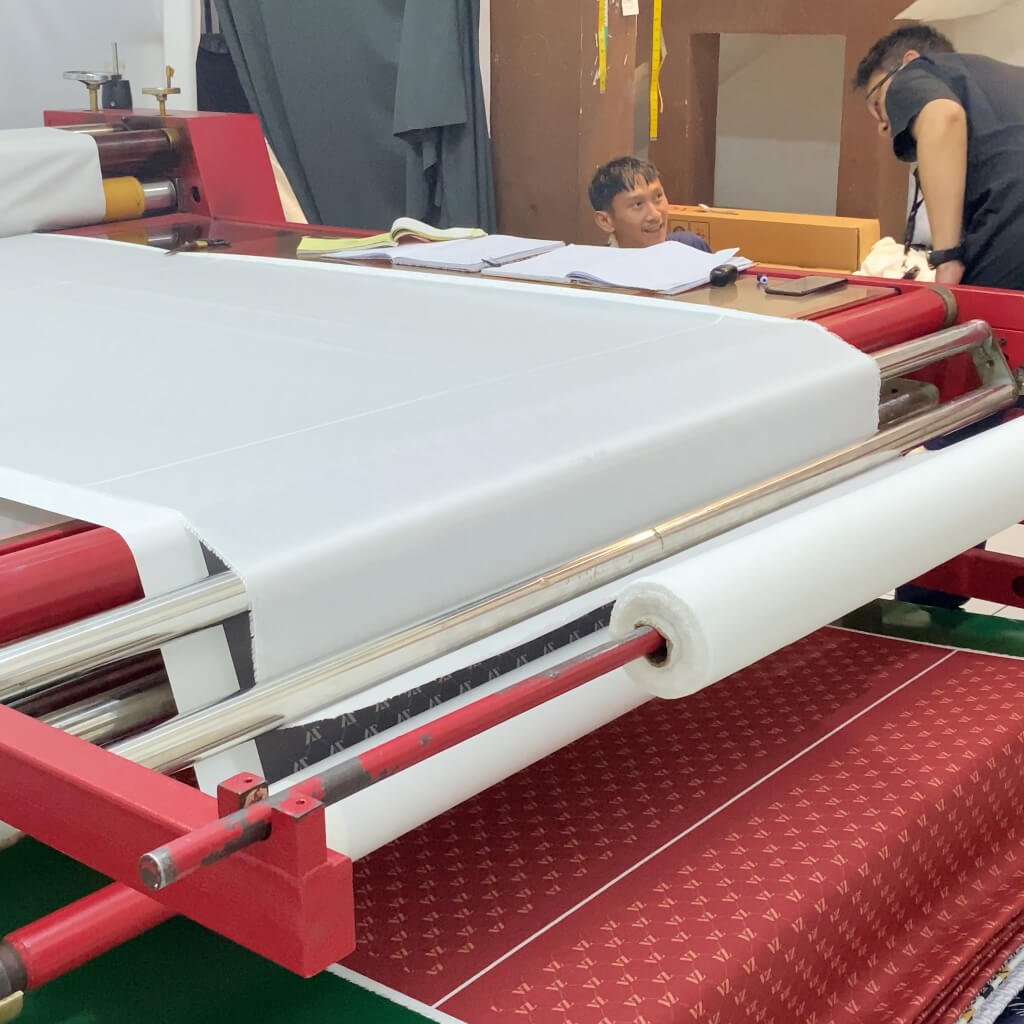
A heat press is used to transfer sublimation ink from transfer paper onto fabric.
There are two main types of heat press machines:
Manual Heat Press Machine
Manually operated by pulling a lever to apply pressure and heat. This type is ideal for small-scale businesses that customize individual items.
However, it’s less suitable for hijab printing due to its limited print area, making it better for smaller products like lanyards or T-shirts.
Roll-to-Roll Heat Press Machine
Designed for large-scale printing or cutting, this machine operates on a roll-to-roll system.
It is perfect for mass production due to its higher efficiency and speed.
For more details on the best heat press machines, visit this guide.
3. Computer

For hijab printing, it’s best to have two computers:
- A high-performance computer for designing – ensures smooth workflow.
- A computer for machine operation – runs specialized software like Raster Image Processing (RIP) software, which optimizes images for printing.
4. Sewing Machine or Laser Cutting Machine
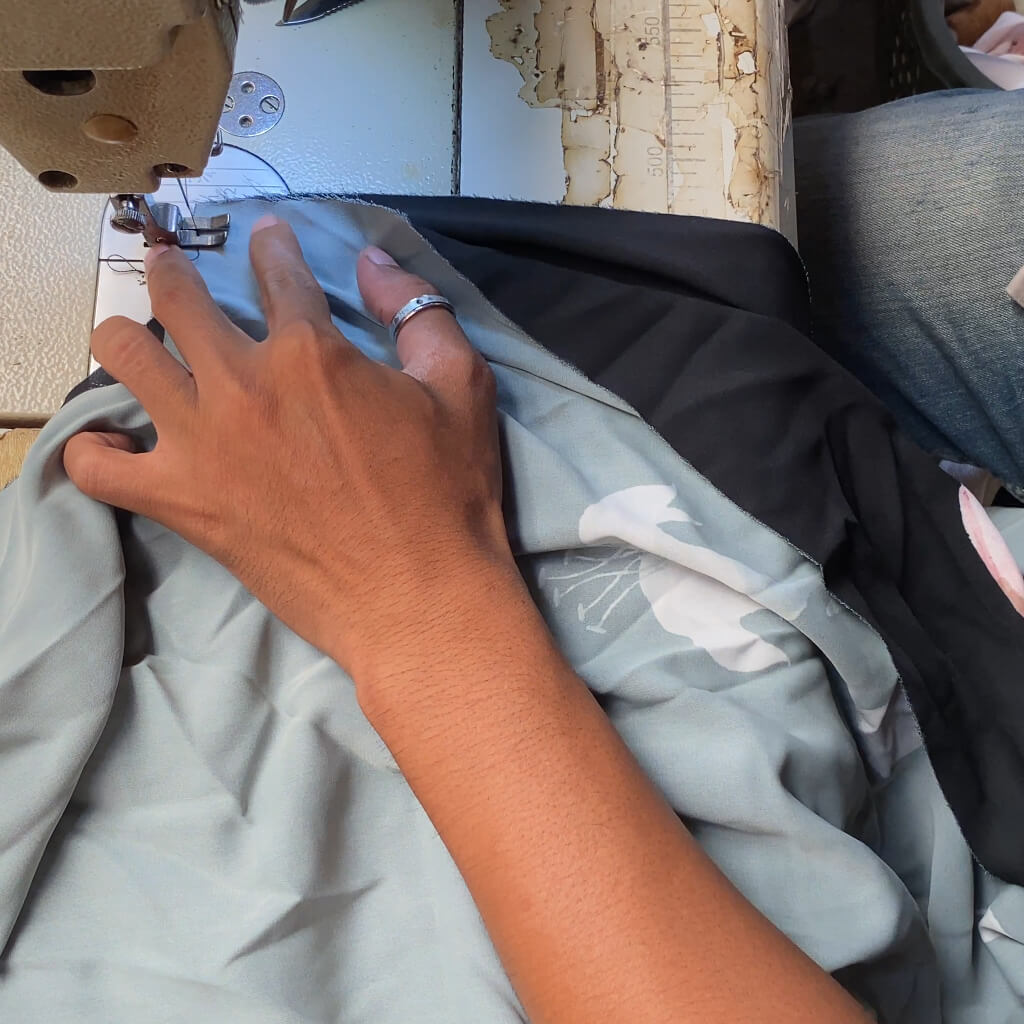
For the finishing stage, you’ll need two types of equipment:
Sewing Machine
A mechanical or electronic device used to stitch fabric, from simple seams to intricate projects.
Laser Cutting Machine
Uses lasers to cut materials with high precision, ideal for cutting hijab fabric.
Laser cutting offers extremely clean edges with precise detailing.
To find the best laser cutting machine for fabric, check out this resource.
B. Essential Raw Materials
Selecting the right materials is crucial to ensure the final product is both beautiful and durable.
1. Sublimation Ink
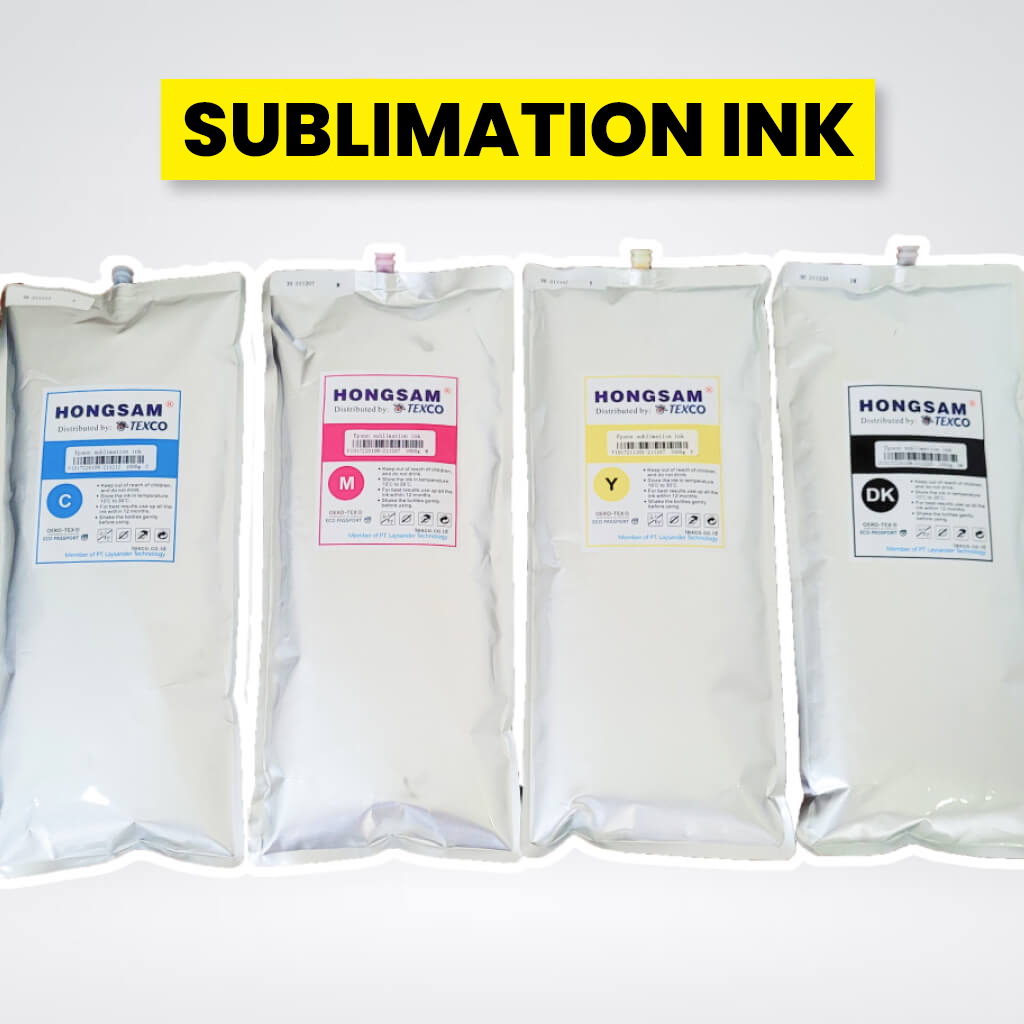
Sublimation ink is a specialized ink used in sublimation printing. It bonds well with polyester-based materials, making it ideal for hijab printing.
For affordable yet high-quality sublimation ink, check out this page.
2. Hijab Fabric

Hijab fabric serves as the base material for the printing process.
Popular fabrics for sublimation printing include BSY (BESWAY), Shakila, Silk, ITY, Chiffon, Maxmara, Woolpeach, Satin, Ceruti, Organza, Parachute, Toyobo, and Voal.
For more details on the best hijab fabrics for sublimation printing, read this guide.
C. Hijab Design Process
Hijab design involves creating unique motifs and color schemes that often incorporate cultural elements, fashion trends, and personal preferences.
Steps for Designing a Hijab

Choosing the Right Design Software
The software should support vector design and large-format printing.
Popular options include Adobe Photoshop and Illustrator.
Creating a Unique and Personal Design
To make a hijab design stand out:
- Experiment with colors, textures, and patterns.
- Incorporate motifs such as floral, geometric, or ethnic designs.
- Use layering and texturing techniques.
- Gather customer feedback for inspiration.
D. Printing the Design Using a Sublimation Printer

The printing process begins with designing the hijab on a computer.
Once the design is ready, the operator prints it onto transfer paper using a sublimation printer.
E. Transferring the Design to the Hijab Fabric
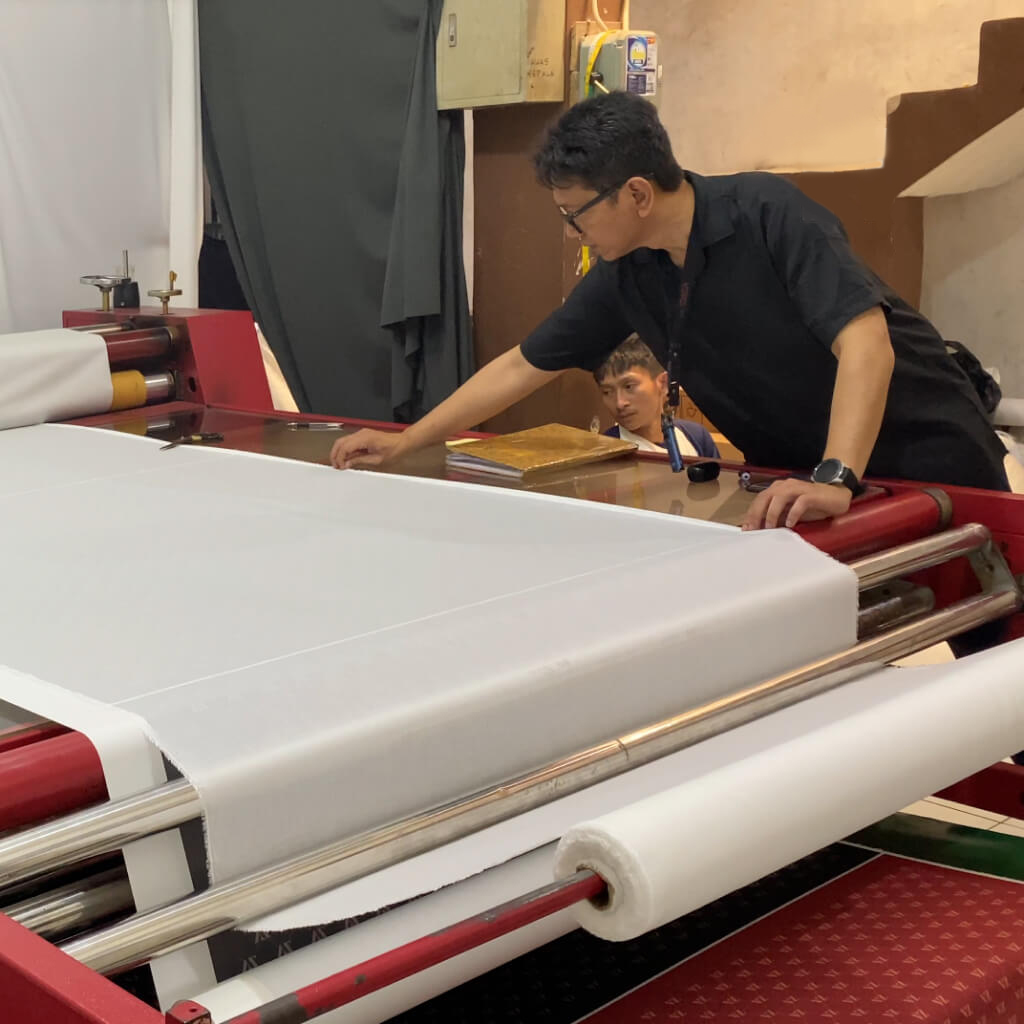
After printing, the design is transferred from the transfer paper onto polyester fabric using a heat press.
Using high-quality sublimation ink like Hongsam Ink ensures vibrant and durable prints.
Heat Press Settings
The ideal temperature for polyester fabric is between 180–230°C.
Common Printing Issues and Solutions
- Dull colors: Adjust heat press temperature and pressure.
- Fabric scorching: Reduce temperature or pressing time.
- Blurred designs: Check paper alignment and heat settings.
Additional Tips
- Follow safety guidelines (wear gloves and masks).
- Clean the heat press regularly to avoid ink buildup.
F. Cutting and Finishing

After printing, the hijab fabric is cut and finished.
Steps for Cutting Hijabs
- Standard hijab pashmina sizes:
- 160 cm x 50 cm
- 190 cm x 75 cm
- 150 cm x 30 cm
- Use a sewing machine or laser cutting machine for finishing.
Tips for Neat Hijab Edges
- Use laser cutting for precision.
- Trim excess threads.
- Test samples before full production.
- Maintain sewing and cutting machines.
G. Quality Control (QC) and Packaging
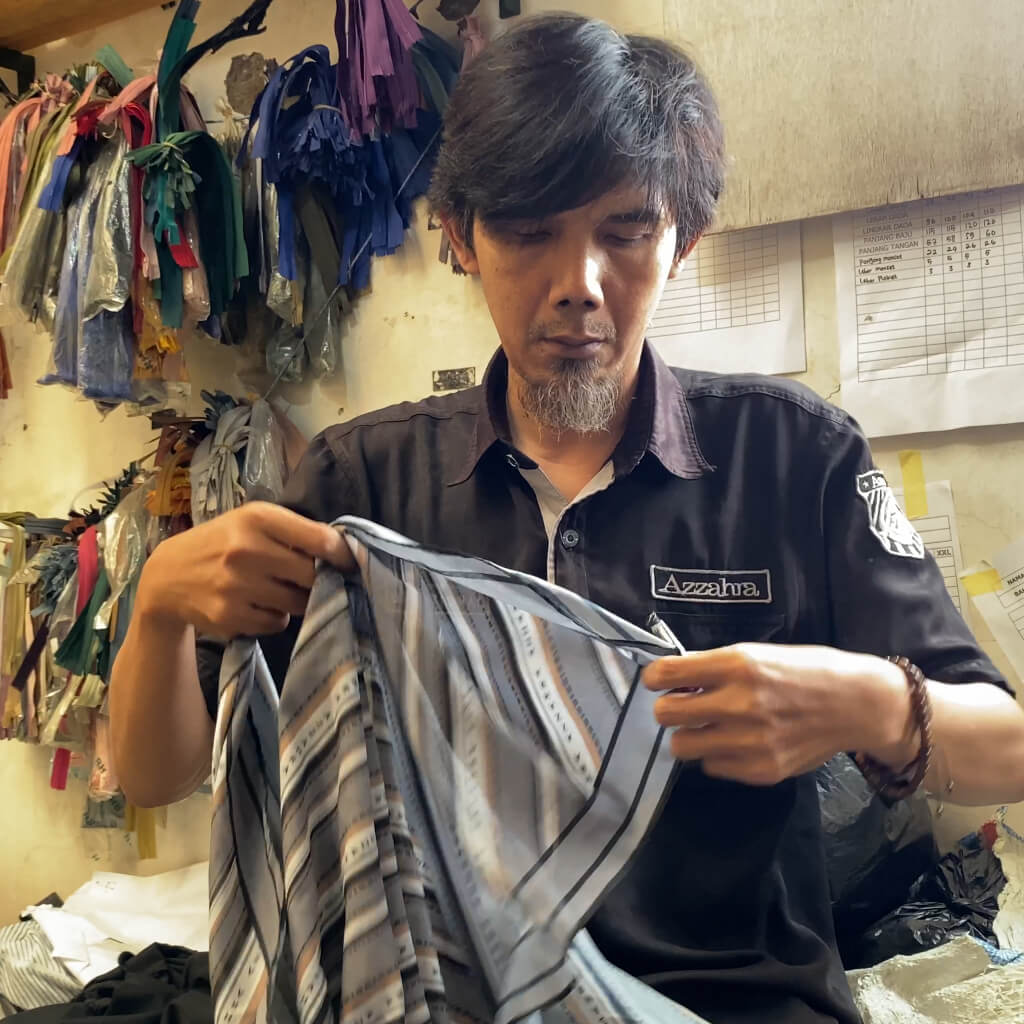
Importance of Quality Control
QC ensures that the hijabs meet customer expectations and helps maintain a strong brand reputation.
Aspects Checked During QC
- Print quality: Sharp and vibrant colors without smudging.
- Fabric quality: No stains or defects.
- Seam quality: Strong and neatly finished.
- Labeling and packaging: Accurate branding and proper packaging.
Safe and Attractive Packaging
- Use high-quality packaging (e.g., premium boxes).
- Fold and pack hijabs neatly to enhance presentation.
- Well-executed QC and packaging improve customer satisfaction.
Conclusion
To make the hijab printing process easier, you can refer to the following table.
| Category | Details |
|---|---|
| Required Equipment | – Sublimation Printer – Heat Press (Manual Press Machine, Roll to Roll Machine) – Computer (for design and operations) – Sewing Machine or Laser Cutting Machine |
| Raw Materials | – Sublimation Ink – Fabric or Hijab Material |
| Hijab Design Process | – Choosing Design Software – Creating a Unique and Personalized Hijab Design |
| Printing Process with Sublimation Printer | – Printing the design on transfer paper |
| Sublimation Process onto Hijab Fabric | – Transferring the design from transfer paper to hijab fabric using a heat press |
| Cutting and Finishing | – Cutting the fabric into hijab pashmina sizes – Neatly trimming the hijab edges |
| Quality Control and Packaging | – QC for print quality, fabric, stitching, and finishing – Secure and attractive packaging process |
If you’re interested in starting your own hijab business, now is the perfect time to take that step.
For a step-by-step guide on launching your hijab brand, check out this article.