
Business Opportunities in Printed Hijabs: Here’s the Calculation

Disclaimer: The prices displayed on this page are subject to change at any time. Please contact our Business Consultant for the latest price updates.
The Muslim fashion industry is growing rapidly.
This growth is marked by an increasing consumer demand for expressing themselves through tunics, dresses, and, of course, beautifully printed hijabs.
From a business perspective, the opportunity in the printed hijab business is huge.
However, to fully seize this opportunity, you need to understand several key aspects that must be implemented and executed.
Start by understanding the capital, selling price, break-even point (BEP), and hijab sales strategies.
If all calculations are accurate, your business can grow quickly!
Get ready to take notes from this article.
The Market for Printed Hijabs
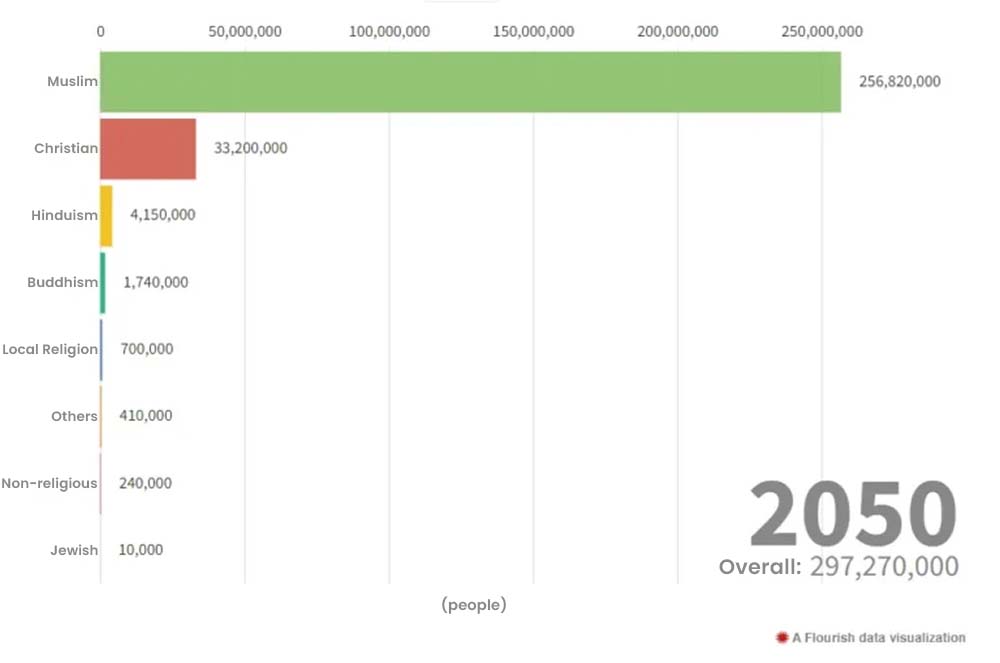
The significant projection of the hijab market in 2050 presents a golden opportunity for Muslim fashion entrepreneurs.
Data from the World Economic Forum (WEF) shows that hijab consumption in Indonesia in 2022 reached 1.02 billion units per year, with transaction values amounting to approximately US$6.09 billion or IDR 91.135 trillion.
Naturally, hijab purchases are influenced by the fact that Indonesia’s population is predominantly Muslim.
Additionally, significant growth is also supported by increasing fashion awareness and the demand for customized products.
The target market for printed hijabs is also very broad, ranging from teenagers to adults.
This indicates that printed hijabs have a large market potential across various age segments.
Trends in design are very dynamic, featuring floral patterns, illustrations, and more.
Customer preferences are becoming more diverse, making custom hijabs one of the innovations that entrepreneurs can explore.
Business Calculation
With such a promising opportunity, many aspiring entrepreneurs are preparing to enter the printed hijab business.
So, what do you need to prepare to ensure smooth and successful operations?
Pay attention to these key points and take notes.
Initial Capital
Understand the structure of initial capital for a well-planned start.
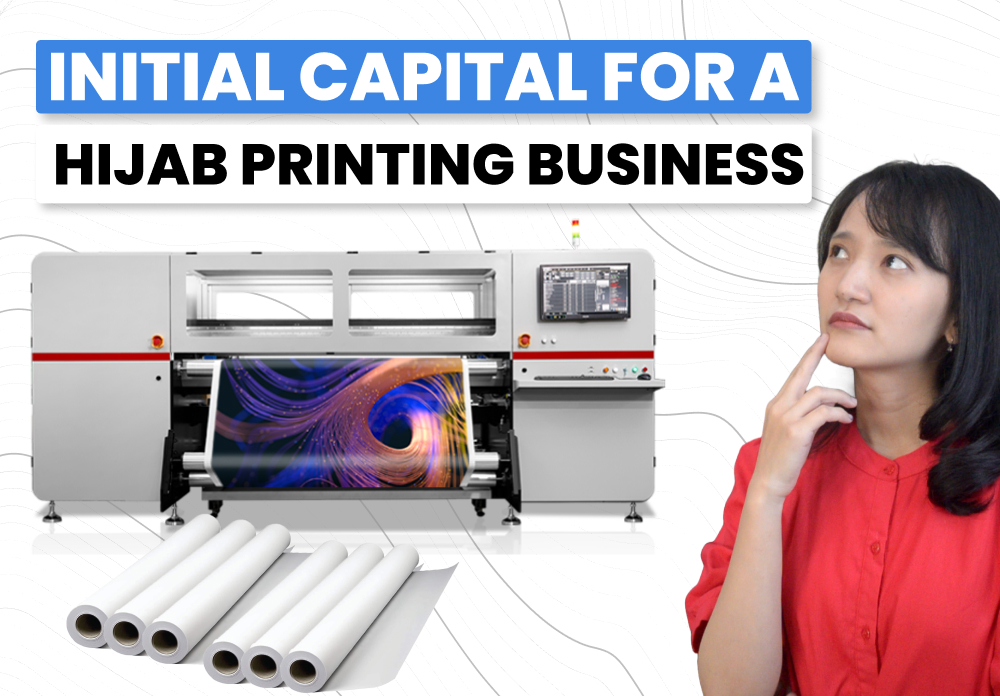
To start a printed hijab business, a deep understanding of initial capital is crucial.
This capital includes production costs, such as purchasing digital printing machines, raw materials, and supporting equipment.
Raw materials may include unprinted hijab fabric, transfer paper, sublimation ink, and other materials.
Additional equipment may also be required, such as a computer for design, scissors, cutters, and other consumables to support production.
Besides that, operational costs also form a significant part of the initial capital.
This includes rental costs for production and sales space, electricity, security costs, other equipment expenses, and operational costs (such as employee salaries, if applicable).
Selling Price and Profit Margin

Effective pricing strategy for printed hijabs based on Cost of Goods Sold (COGS) and product value addition.
Determining the selling price of printed hijabs largely depends on the Cost of Goods Sold (COGS).
COGS includes all direct production costs, from materials to production location expenses.
This serves as the basis for pricing, with an additional profit margin set above the total production cost.
This method ensures that profit margins are sufficient to cover fixed costs and reinvest in the business.
It is also important to consider factors such as the target market, competitors, and added product value when setting the selling price.
Break-Even Point (BEP)
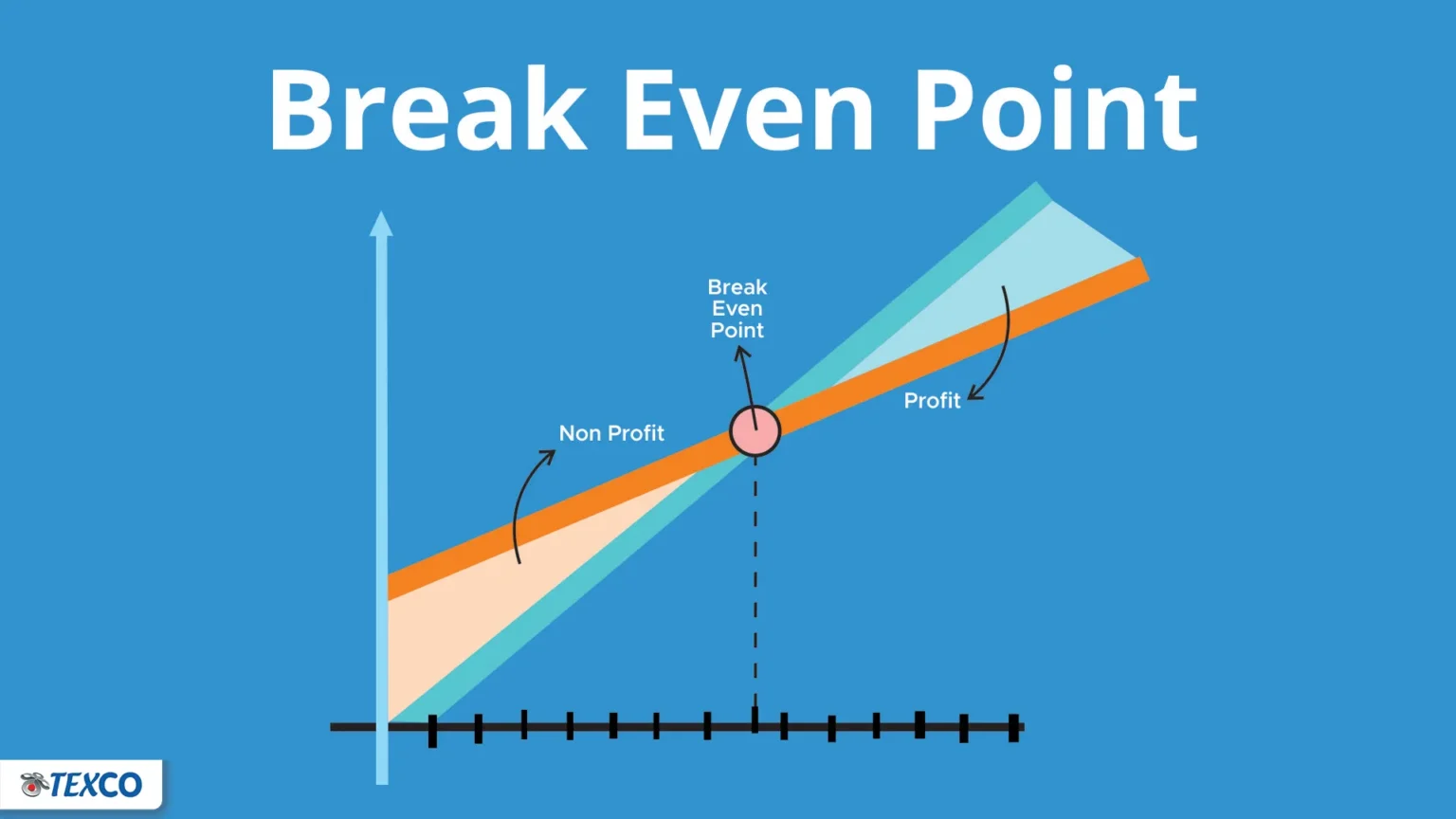
Optimize your BEP calculations with contract manufacturing services.
To calculate the break-even point (BEP) for the printed hijab business, you need to determine the total production cost and total revenue.
After that, calculate the initial investment cost to estimate the BEP period.
Monthly Operational Cost Calculation
Here’s how to calculate the total monthly operational costs for hijab production:
- Rent Cost
IDR 15,000,000 / month
- Electricity Cost
1500 W for Sublimation Printer Texco Fedar
7000 W for Heat Press Machine Roll ZH1232
Total usage of 8,500 W, running for 8 hours/day.
Use the R-3/TR category with a power capacity of 6,600 VA and above, at Rp 1,699.53 per kWh (rounded to 1,700).
1 kWh: 8,500 x 8 : 1,000 = 68 kWh
68 x 1,700 = Rp 115,600 / day Electricity cost per month, 115,600 x 30 = IDR 3,468,000 /month.
- Human Resources (HR) Costs
To compete in the market, it is advisable to use a sewing and cutting service through a maklon, with an estimated market price of around 6,000 per piece. In addition, employees are also needed:
2 Operators, IDR 1,000,000 / person per month
1 Admin, IDR 1,000,000 / month
1 Designer, IDR 1,000,000 / month
- Marketing Costs
For example, using Influencers / endorsement from Instagram celebrities. For a medium-scale business, consider choosing:
• Nano influencers (800 – 10,000 followers): IDR 201,667 per content (rounded to 200,000).
If using 3 content pieces per month, the monthly cost is: IDR 600,000
- Raw Material Costs
1. Transfer Paper Texco 1 Roll Gramasi 70 gr 1.2 x 500 = IDR 2,850 / meter
2. Sublimation Ink Hongsam CMYK: IDR 275,000 / liter. For a hijab size of 1.15 x 1.15 m = 1.32 meters, the ink price is around IDR 3,630 / piece.
3. Voal fabric IDR 12,000 / meter.
Therefore, the total material cost per hijab is 2,850 + 3,630 + 12,000 = IDR 19,392.
*Prices are subject to change at any time.

Production Capacity Calculation
In one day, the Fedar 4-Head Sublimation Printer with a speed of 160m²/hour
Hijab area: 1.15 x 1.15 m = 1.32 m²
That means, 160 m²/hour ÷ 1.32 = 121 hijabs/hour
With 10 hours of production per day, it means 969 hijabs are produced in one day.
This means the maximum capacity of this printer is around 29,000 pcs/month.
So, you can accept orders within that range.

Machine Investment Cost Calculation
To manufacture hijabs, you need at least two machines:
- Sublimation Printer Fedar: IDR 240,000,000
- Texco Heat Press Machine Roll ZH1232: IDR 100,000,000
Total investment: IDR 340,000,000
*Prices are subject to change at any time.
Break-Even Point (BEP) Calculation
For example, you sell Rp 35,000 / pcs hijab.
Assuming 200 hijabs are sold in one day, then 200 pcs x 30 days = 6,000 pcs / month are sold.
After getting the cost, calculate the BEP with the following details:
- Operational costs Employee Salary Costs + Maklon Costs + Rental Costs + Electricity Costs + Raw Material Costs + Marketing Costs (IDR 4,000,000 + IDR 36,000,000 + IDR 1,500,000 + IDR 3,468,000 + 116,352,000 + IDR 600,000) = IDR 161,920,000 / month)
- Income per month: IDR 35,000 x 6,000 = IDR 210,000,000 / month
- Profit per month: IDR 210,000,000 – 161,920,000 = 48,080,000
- Total initial investment in the machine: IDR 340,000,000,-
Then the formula The BEP is: Initial Investment / Profit per Month
BEP Value: IDR 340,000,000 / IDR 48,080,000 = 7.07
So the possibility of this business will run with an investment of around 7 months and 7 days.
*Prices Displayed May Change at Any Time

Disclaimer!
- The BEP figure is flexible and will vary depending on monthly sales.
- The higher the sales, the faster the BEP.
- Raw material prices fluctuate based on market conditions.
For a more detailed calculation, consult our experts for free here.
Marketing Strategy
Use innovative marketing strategies to revolutionize your printed hijab business.

Effective and innovative marketing strategies are crucial for attracting and retaining customers.
Social media and influencer marketing are highly effective promotional strategies.
Social media can reach a broad audience at a relatively low cost, while influencers help build trust in the target market.
For these strategies to succeed, your product needs added value.
For example, unique hijab designs can attract consumers, particularly those who follow fashion trends.
Choosing online marketplaces or physical stores depends on your target market and available resources.
A combination of both can increase reach and flexibility in serving customers.
For a detailed guide on hijab marketing strategies, check out this article.
Conclusion
The printed hijab business in Indonesia presents a significant opportunity in line with the rapid growth of the Muslim fashion market.
However, challenges remain, including intense competition, the need for continuous design innovation, and managing production costs efficiently.
Accurate calculations are key to maintaining profit margins.
If you’re interested in starting a printed hijab business, consult our experts here.
We’re ready to help you succeed!