
DTG Printing vs. Screen Printing: Which is More Profitable?

Your profitability choice between DTG and screen printing depends on your business model and order volumes. DTG offers better returns for small runs (1-20 items) and custom orders, with minimal setup costs and quick turnaround times. You’ll need $15,000-$30,000 for initial equipment. Screen printing becomes more profitable for bulk orders (20+ items), with setup costs of $2,000-$5,000 and earnings of $2-3 per shirt on 500+ piece orders. While DTG excels in customization and sustainability, screen printing dominates high-volume production. Your target market and production goals will guide which method maximizes your profits.
Key Takeaways
- Screen printing becomes more profitable for orders exceeding 20-25 units due to lower per-unit costs and efficient bulk production.
- DTG printing generates higher profits on small or customized orders due to minimal setup costs and premium pricing potential.
- Screen printing can earn $2-3 per shirt on large orders of 500+, making it ideal for high-volume business models.
- DTG requires higher initial investment ($15,000-$30,000) but offers better ROI for businesses focusing on customization and small batches.
- Screen printing’s lower startup costs ($2,000-$5,000) make it more accessible, though setup time and labor affect overall profitability.
What is DTG (Direct to Garment) Printing?
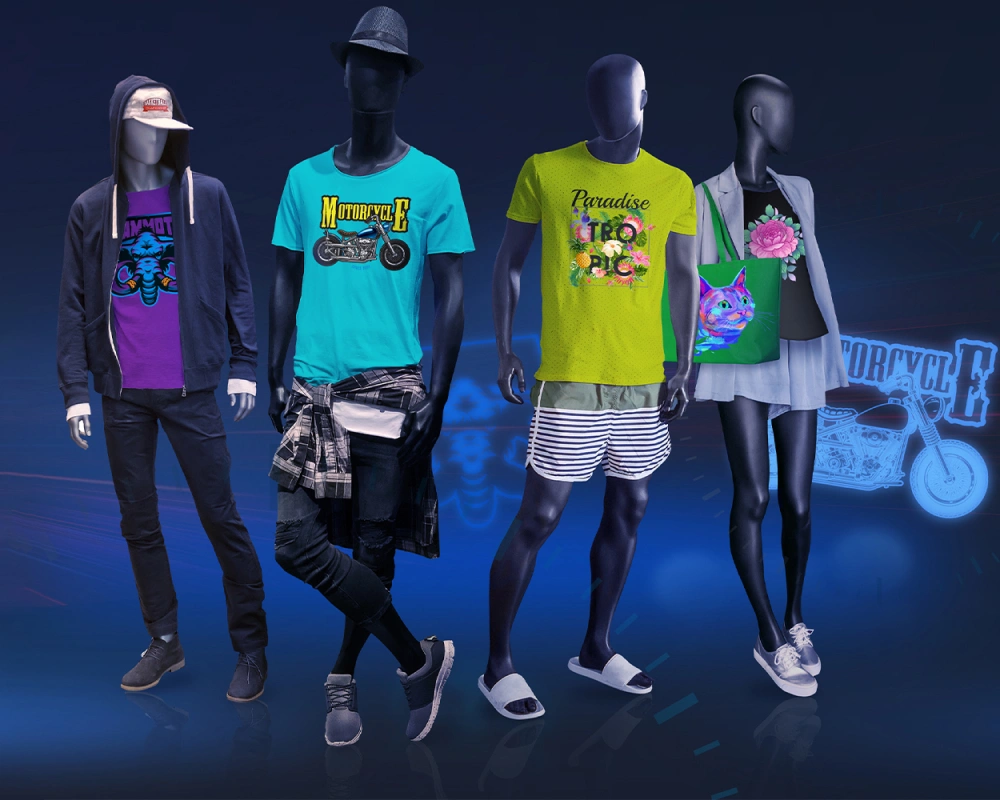
Direct to Garment (DTG) printing is a modern digital printing technology that works like an inkjet printer for fabric. You’ll find it’s transforming the custom apparel industry by allowing precise, full-color designs to be printed directly onto garments.
When you’re comparing dtg vs screen printing, you’ll notice DTG offers incredible detail and color accuracy. The process uses specialized water-based inks that absorb into the fabric fibers, creating soft, breathable prints that won’t crack or peel.
With direct to garment printing, you can print complex designs with unlimited colors in a single pass. There’s no need for color separations or multiple screens – your artwork goes straight from computer to garment.
You’ll appreciate that DTG requires minimal setup time and no minimum order quantities. This means you can print just one shirt or thousands, making it perfect for print-on-demand businesses.
The technology excels with photorealistic images, gradients, and intricate details. While it works best on cotton and cotton-blend fabrics, pre-treatment solutions now allow for vibrant prints even on dark garments.
What is Manual Screen Printing?

Traditional craftsmanship meets artistic expression in manual screen printing, a time-tested method where ink is pushed through a mesh stencil onto fabric. You’ll find this technique is particularly effective for custom apparel production, especially when you’re working with bold designs and solid colors.
When you’re considering a screen printing cost analysis, you’ll discover that setup costs include screens, inks, and manual equipment. But don’t let that initial investment worry you – it’s often more cost-effective for larger batch orders.
Here’s how it works: You’ll create a separate screen for each color in your design. Then you’ll manually press ink through these screens onto your garment. The process requires skill and patience, but you’ll achieve thick, vibrant ink deposits that last.
The beauty of manual screen printing lies in its versatility. You can print on various materials, from t-shirts to tote bags. While it’s more labor-intensive than DTG printing, you’ll find that the results are worth the effort. Your prints will have that distinctive, professional look that customers love, with excellent durability and wash resistance.
6 Key Differences Between DTG and Screen Printing: A Business Perspective for Textile Industry Professionals

When you’re choosing between DTG and screen printing for your textile business, you’ll need to understand how each method impacts your bottom line. You’ll find major differences in their production processes, quality standards, operational workflows, design capabilities, and cost structures that directly affect your business growth. Whether you’re launching a new apparel line or expanding your current operations, these key differences will shape your production strategy and market positioning.
1. Production Process & Scalability

The fundamental differences in production processes between DTG and screen printing significantly impact a business’s scalability potential. With DTG printing, you’ll find it easier to scale up or down quickly since there’s minimal setup time between orders.
You can switch between designs instantly with DTG, making it perfect for businesses with diverse product lines. There’s no need to store screens or worry about setup costs. Your DTG scalability depends mainly on the number of printers you have and their operational hours.
Screen printing scalability works differently. While it’s slower to set up initially, you’ll achieve faster production speeds once everything’s in place. You can print hundreds of identical items per hour, making it ideal for bulk orders.
Consider this practical example: With DTG, you might print 20 different designs in an hour. With screen printing, you could produce 300 pieces of the same design in that time. Your choice depends on whether you need versatility or volume.
Remember that DTG requires less storage space and inventory management, while screen printing needs dedicated areas for screens, inks, and curing equipment.
2. Output Quality & Consistency
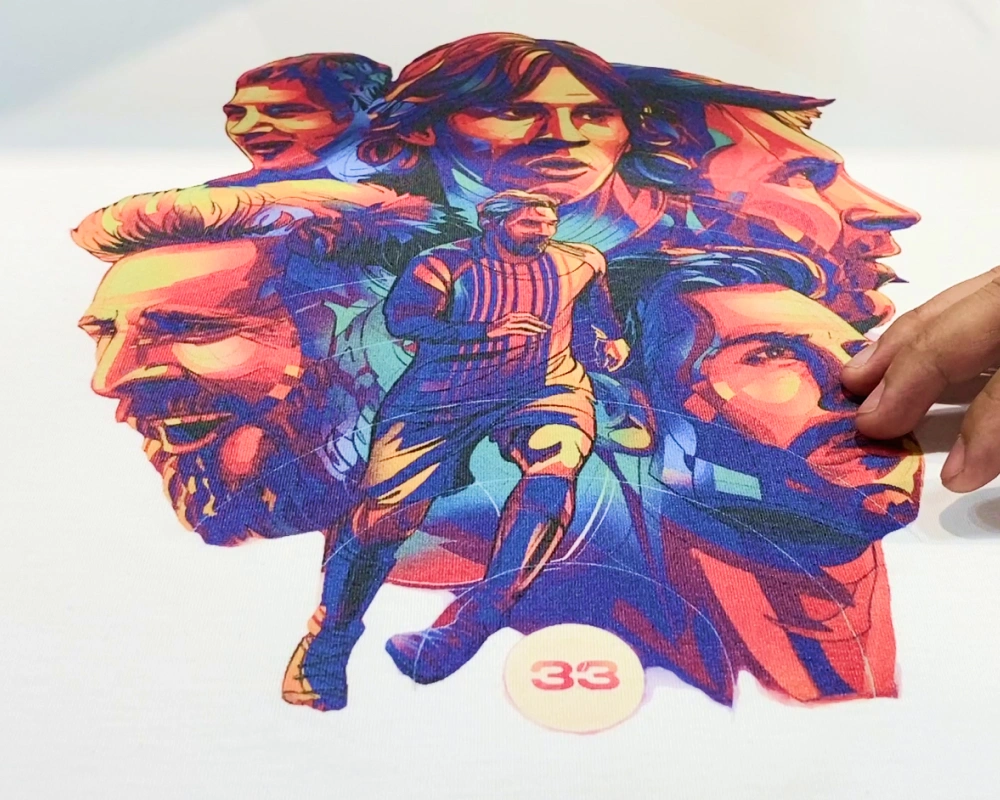
Both printing methods deliver distinct quality characteristics that business owners need to understand. When examining dtg print quality, you’ll notice incredibly precise detail reproduction and smooth color gradients that closely match digital designs. Your photorealistic images and complex artwork will maintain their integrity throughout production.
Screen printing delivers excellent color vibrancy and durability, which directly impacts your screen printing ROI. You’ll get thick, solid ink deposits that really pop on dark fabrics. The finished products often outlast the garments themselves.
DTG offers remarkable consistency across small batch runs. You won’t see variations between prints because the digital process eliminates human error. However, you might notice slight color differences between production batches.
With screen printing, consistency depends heavily on operator skill. While experienced printers deliver uniform results, you may encounter slight variations in ink density or alignment. This becomes more noticeable in designs with multiple colors.
For maximum quality control, consider DTG for detailed artwork and screen printing for bold, simple designs. Your choice should align with your specific product offerings and customer expectations.
3. Operational Efficiency & Turnaround Time

From an operational standpoint, DTG printing significantly outpaces screen printing in setup and turnaround times. You’ll find that DTG requires minimal preparation – just upload your design, adjust your printer settings, and you’re ready to go. This quick setup means you can fulfill orders within hours rather than days.
Your initial dtg investment might seem steep, but you’ll save countless hours in production time. There’s no need to create separate screens, mix inks, or wait for designs to dry between color applications. You can print multiple orders with different designs back-to-back without any additional setup.
Screen printing’s environmental impact is particularly higher due to the cleaning solvents and water usage required between prints. You’ll need to factor in time for screen cleaning, ink storage, and waste disposal. These tasks can add hours to your production schedule.
With DTG, you’re looking at about 5-7 minutes per shirt from start to finish. Screen printing might take 30-45 minutes just for setup, plus additional time for each color in your design. This efficiency difference directly impacts your ability to meet tight deadlines and handle rush orders.
4. Design Versatility & Customization Capabilities

When comparing design versatility, DTG printing stands out with its ability to handle virtually unlimited color variations and intricate details. You’ll find that DTG technology can reproduce photorealistic images, gradients, and complex artwork without additional setup costs. This makes it perfect for print on demand businesses that need flexibility.
You can easily switch between different designs with DTG printing. There’s no need to create separate screens or worry about color limitations. Want to print a detailed portrait one minute and a complex pattern the next? DTG makes it possible without missing a beat.
Screen printing, while excellent for simple designs, can’t match DTG’s customization potential. You’re limited by the number of screens and colors you can use. Each additional color means more setup time and cost.
With DTG, you’re free to experiment with:
- Full-color photographs
- Intricate illustrations
- Color gradients
- Small text details
- Varied color combinations
This versatility allows you to offer customers unlimited design options. You can quickly adapt to trends and create unique pieces that stand out in the market.
5. Cost Analysis & Return on Investment (ROI)

Understanding the cost structure and ROI potential of DTG versus screen printing will help you make informed business decisions. Let’s analyze how these textile printing methods impact your bottom line.
DTG printing requires higher initial equipment costs ($15,000-$30,000), but you’ll save on setup expenses. You won’t need screens, storage space, or large inventories. Your ROI comes from the ability to print on-demand without minimum orders.
Screen printing has lower startup costs ($2,000-$5,000) but demands more labor and materials per design. You’ll see better ROI on bulk orders since the setup costs spread across more items. The break-even point typically occurs around 20-25 units.
Here’s what affects your profitability:
- DTG excels with small runs and custom orders
- Screen printing becomes more cost-effective at 50+ units
- DTG maintenance costs are higher but offset by reduced labor
- Screen printing supplies cost less but require more storage
Your best choice depends on your business model. If you’re focusing on customization and quick turnaround, DTG offers better ROI. For high-volume standardized orders, screen printing will maximize your profits.
6. Environmental Impact & Sustainability
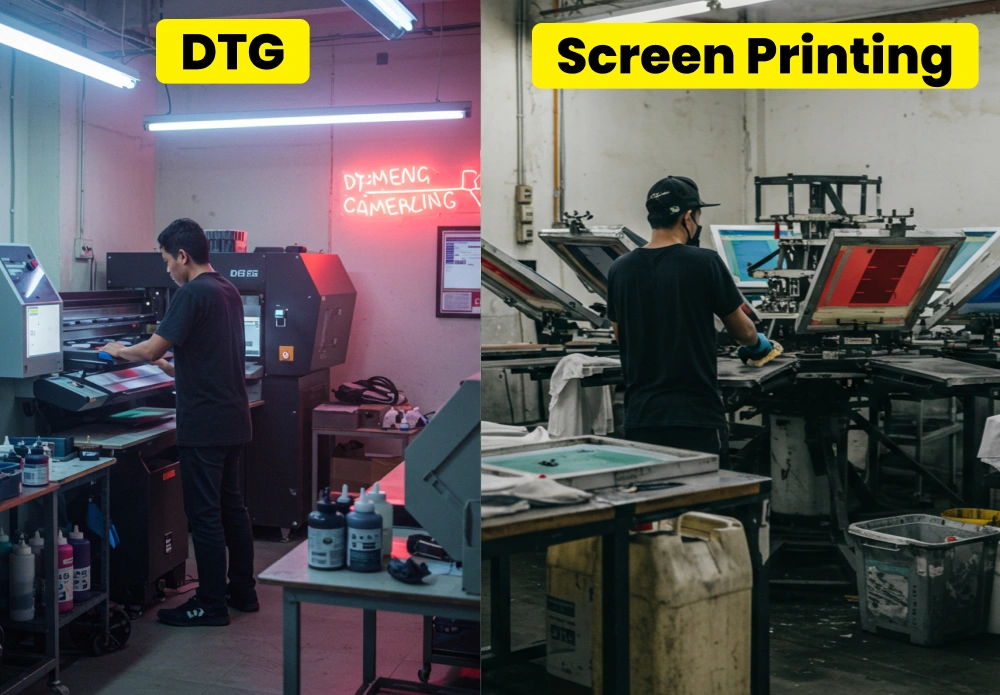
The environmental footprint of textile printing methods has become increasingly critical for modern businesses. If you’re weighing your options, you’ll find DTG printing offers significant eco-friendly advantages over traditional screen printing.
DTG printing reduces waste through its print-on-demand nature. You’ll only print what you need, when you need it, eliminating excess inventory that might end up in landfills. The water-based inks used in DTG are typically more environmentally friendly than plastisol inks common in screen printing.
Screen printing’s traditional processes involve more chemical usage during setup and cleanup. You’ll notice higher water consumption and chemical waste from emulsion removal and screen reclaiming. However, newer eco-friendly printing innovations in screen printing are emerging.
Let’s break down the key sustainability factors:
DTG Benefits:
- Minimal water waste
- Lower energy consumption
- Reduced chemical usage
- Zero excess inventory
- Biodegradable ink options
Screen Printing Challenges:
- Higher water usage
- Chemical-intensive cleanup
- Bulk production waste
- More energy consumption
For textile printing sustainability, DTG clearly leads the way in environmental responsibility. You’ll find it easier to maintain green business practices while meeting modern consumers’ eco-conscious demands.
So… Which one is more profitable? DTG Printing or Screen Printing?
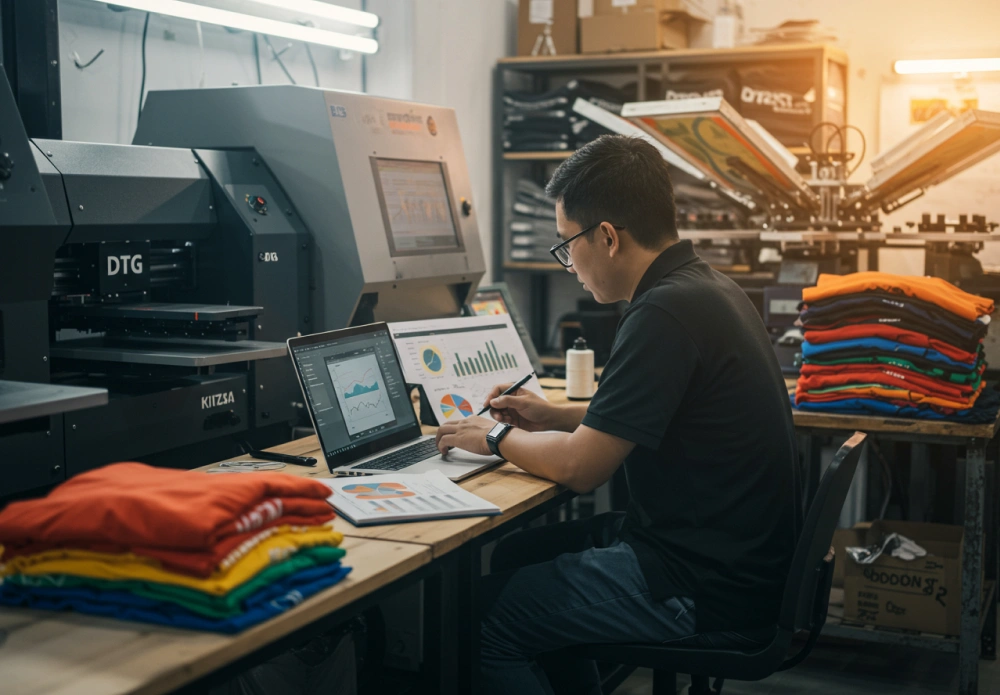
Profitability between DTG and screen printing largely depends on your business model and order volumes. Each method offers distinct advantages that can impact your bottom line in different ways.
For small batches and custom orders, DTG printing typically generates better profits. You’ll face lower setup costs and can price items higher due to the premium quality and customization options. Plus, DTG’s environmental impact is minimal, which helps attract eco-conscious customers willing to pay more.
Screen printing becomes more profitable when you’re handling large volumes. While initial setup costs are higher, your per-unit costs decrease significantly as order quantities increase. You might make $2-3 per shirt on orders of 500+ pieces, compared to $8-12 per shirt with DTG for small runs.
Your target market also affects profitability. If you’re serving businesses needing bulk uniforms, screen printing is your money-maker. But if you’re targeting individuals wanting unique designs or operating an online store, DTG’s flexibility and lower inventory costs could boost your profits.
Remember to factor in equipment maintenance, labor costs, and market demand when choosing your printing method.
Frequently Asked Questions
How Long Does It Take to Learn DTG Printing Compared to Screen Printing?
You’ll find DTG printing easier to master, typically taking 2-3 weeks to learn the basics of machine operation and design software.
Screen printing has a steeper learning curve, requiring 3-6 months to become proficient. You’ll need to master multiple techniques like mesh selection, ink mixing, and proper squeegee pressure.
Can DTG and Screen Printing Be Combined for Special Effects?
Ever dreamed of creating mind-blowing designs that pop off the fabric? You’ll love combining DTG and screen printing for unique effects. You can use screen printing for vibrant base layers or special inks like metallics, then add detailed DTG elements on top. This hybrid approach lets you utilize the best of both worlds – screen printing’s texture and DTG’s precision. You’ll get stunning results that’ll set your designs apart.
What Maintenance Costs Should I Expect for DTG Printing Equipment?
You’ll need to budget for regular maintenance costs with your DTG printer. Expect to spend $1,000-2,000 annually on printhead replacements and cleaning solutions. Daily cleaning takes about 15 minutes of your time. You’ll also need to replace ink cartridges regularly, costing $200-400 monthly depending on production volume. Don’t forget about annual service checks and potential repair costs if something breaks down.
How Do Environmental Regulations Affect Both Printing Methods?
You’ll need to comply with different regulations for both printing methods. DTG printing typically faces fewer environmental restrictions since it uses water-based inks and produces minimal waste. However, you must properly dispose of pretreatment chemicals.
Screen printing faces stricter oversight due to chemical solvents and ink disposal. You’ll need permits for waste management and air quality compliance. Many areas require specialized handling of chemical cleaners and excess inks.
What Are the Space Requirements for Setting up Each Printing Operation?
You’ll need significantly different spaces for these two printing methods. DTG printing requires a compact setup – you can start with just 100-150 square feet for a single printer and heat press.
Screen printing demands more room, typically 500-800 square feet minimum. You’ll need space for screens, drying racks, exposure units, washout stations, and ink storage.
Both setups need proper ventilation and climate control for ideal performance.
Conclusion
Your choice between DTG and screen printing depends on your specific business needs. With screen printing earning 30% higher profit margins on bulk orders over 50 units, it’s ideal if you’re targeting large volume sales. However, DTG’s flexibility and lower startup costs make it profitable for small runs and custom orders. You’ll need to analyze your market, startup capital, and target customers to determine which method will maximize your profits.