
6 Best Laser Cutters for Fabric: 2025 Textile Industry Guide
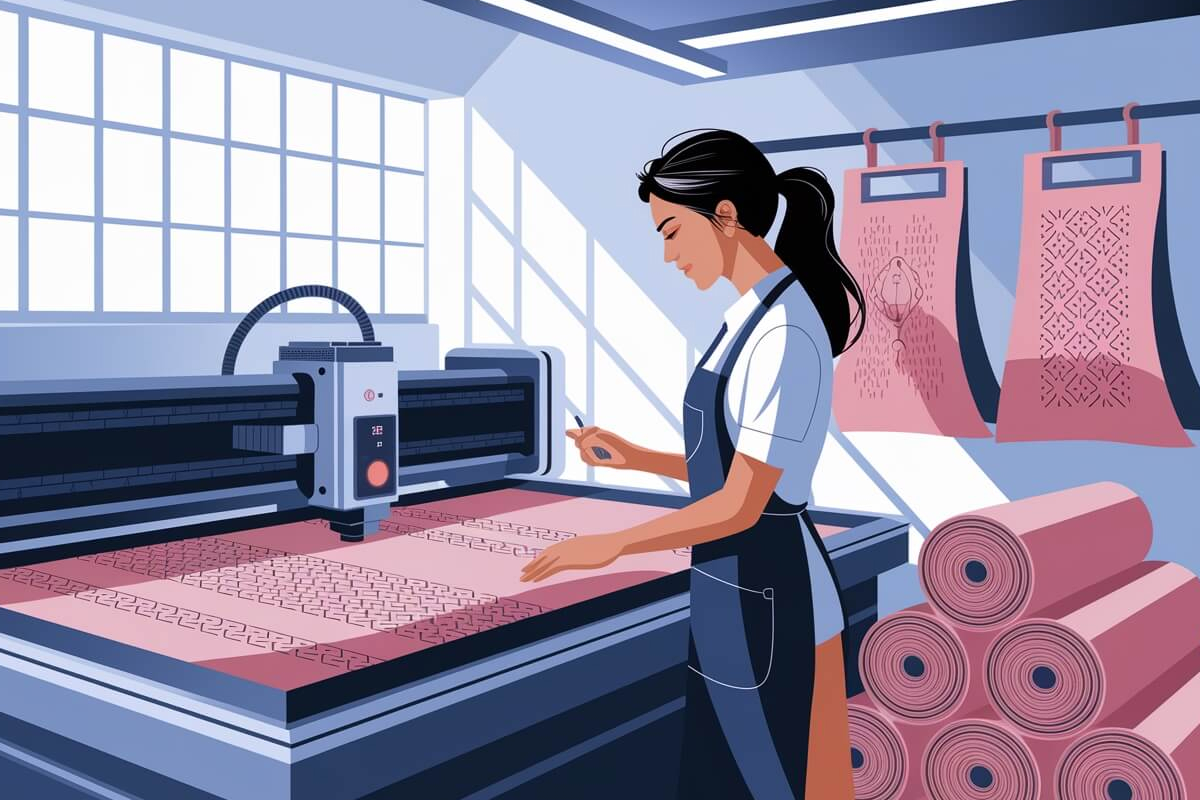
Looking to upgrade your textile production in 2025? The top fabric laser cutters include the Zenna Roll with its 6-head system, Akara’s dual-head speedster, HANMA HM 1310CCD for precision work, QiangDa KD1618 for large projects, and the RCL series for deformed fabrics. These machines offer cutting speeds up to 600mm/s with accuracy down to 0.025mm. Let’s investigate how these powerhouses can transform your fabric cutting operation.
Key Takeaways
- Zenna Roll and QiangDa KD1618 lead the market with dual-track systems and high-speed cutting capabilities up to 60cm/s.
- HANMA HM 1310CCD offers exceptional precision with 0.025mm accuracy and versatility across multiple fabric types.
- Automatic feeding mechanisms and CCD camera systems are essential features in top 2025 models for continuous production.
- CO2 laser technology delivers clean, precise cuts without fraying, with power options ranging from 60W to 150W.
- Modern laser cutters require proper ventilation, dedicated floor space, and integration capabilities with existing workflow systems.
The Importance of Laser Cutting Machines in the Textile Industry
While the textile industry has evolved significantly over the decades, laser cutting machines have transformed how manufacturers process and cut fabric.
You’ll find that a fabric laser cutting machine delivers precision that traditional methods simply can’t match. It’s like having a digital artist with perfect accuracy every time.
Laser cutting for apparel manufacturing has changed production speeds and reduced material waste. You’re looking at cleaner edges and intricate designs that weren’t possible before.
Whether you’re creating complex patterns or managing bulk orders, these machines offer consistency and efficiency. They’ve become essential tools for modern textile businesses looking to stay competitive.
The CO2 laser source generates intense heat that precisely melts or vaporizes fabric along predetermined cutting paths, ensuring exceptional quality in the final product.
Best Fabric Laser Cutting Machines for 2025
Fabric laser cutting technology has revolutionized the textile industry with groundbreaking precision and efficiency that was unimaginable just a few years ago.
From basic models to sophisticated systems, these cutting-edge machines are reshaping how businesses approach fabric processing in 2025.
1. Zenna Roll Fabric Laser Cutting Machine

The Zenna Roll Fabric Laser Cutting Machine transforms sportswear and fashion production with its dual-track system and up to 6 laser heads.
You’ll appreciate the intelligent image recognition system that automatically detects patterns using a high-resolution Canon 1500D camera.
This powerhouse handles materials up to 1.2 cm thick with cutting speeds reaching 40 cm/s. You’re getting precision and efficiency in one package.
The 80 kg capacity automatic roll feeder keeps your production running smoothly. Whether you’re cutting jerseys, hijabs, or swimwear, you won’t need to pause.
Think of it as your fabric-cutting command center. With compatibility for AI, DXF, DST, BMP, and PLT files, you’ll tackle any design challenge.
The Leadshine Servo Drive and pure oxygen compressor guarantee clean, precise cuts every time. It’s like having a master tailor with laser precision.
Best For: Medium to large-scale garment manufacturers and fashion businesses needing high-volume, precise fabric cutting for sportswear, fashion items, and technical textiles.
Pros:
- Versatile dual-track system with multiple laser heads enables high-speed production and efficient workflow
- Advanced intelligent image recognition with Canon 1500D camera ensures accurate pattern detection and cutting
- Comprehensive material compatibility with an 80 kg capacity automatic roll feeder for continuous operation
Cons:
- Significant space requirement with dimensions up to 3.85 x 2.25 x 2.45 m may not suit smaller workshops
- High power consumption (2500 Watt) could impact operational costs
- Initial investment and complexity may be overwhelming for small businesses or startups
2. Akara Fabric Laser Cutting Machine

Operating twice as fast as standard machines, the Akara Fabric Laser Cutting Machine stands out for professional fabric manufacturers who need high-volume production capabilities. Its dual-head laser system and automatic feeding mechanism work together seamlessly.
You’ll appreciate the DSLR camera recognition mode that guarantees precise contour cutting. The 1.6 x 1 m working area handles large projects with 0.1 mm accuracy.
The sealed CO² glass laser tube, available in 130W or 150W options, delivers consistent results while keeping power consumption low. You’ll find maintenance is straightforward with simple cleaning procedures.
Let’s talk specs:
- Model: Akara
- Working Area: 1.6 x 1 m
- Conveyor working table
- Automatic feeding system
- Recognition mode with DSLR camera
Best For: Small to medium-sized fabric manufacturers and textile businesses requiring high-volume, precise cutting capabilities while maintaining efficiency and quality.
Pros:
- Dual laser head system doubles cutting speed compared to standard machines
- Advanced DSLR camera recognition ensures precise contour cutting
- Automatic feeding system enables continuous operation for complex patterns
Cons:
- Significant initial investment required for the technology
- Limited to fabric materials only
- Requires dedicated space due to large 1.6 x 1 m working area
3. Akara Premium Fabric Laser Cutting Machine

Serious fabric crafters and industrial manufacturers will appreciate the Akara Premium’s exceptional precision, since it delivers cutting accuracy within ±0.1mm while preserving intricate design patterns.
You’ll find the CO2 glass laser tube comes in three power options: 80W, 130W, or 150W. This gives you flexibility based on your specific cutting needs.
The vacuum conveyor working table makes fabric handling a breeze. You won’t have to worry about material shifting during cuts.
Let’s examine its efficiency features. The advanced camera technology speeds up pattern reading while reducing errors in the cutting process.
You’ll love how it maintains smooth fabric surface texture even with intricate designs. The automatic feeding system means you can focus on creativity instead of manual material handling.
Best For: Professional garment manufacturers and textile businesses requiring high-precision fabric cutting and engraving for intricate pattern designs at scale.
Pros:
- Exceptional cutting precision (±0.1mm) ensures consistently accurate results
- Multiple laser power options (80W/130W/150W) accommodate different fabric types and thicknesses
- Automated features like vacuum table and feeding system increase productivity while reducing errors
Cons:
- Significant initial investment required given its premium positioning
- Requires dedicated space and proper ventilation for laser operation
- May need specialized training for operators to fully utilize advanced features
4. HANMA HM 1310CCD Textile Laser Cutting Machine

Professional clothing manufacturers and industrial textile designers will appreciate the HANMA HM 1310CCD’s impressive precision capabilities. You’ll get resolution accuracy down to 0.025mm for distortion-free cutting across a generous 1300 x 1000mm working area.
Let’s investigate what you can create with this versatile machine. It’ll handle everything from delicate fabrics to technical textiles with ease.
You’ll find its 60w to 150w laser power perfect for automotive components and medical textiles. The non-contact processing guarantees clean edges every time.
Moving on to compatibility, you can work with most materials except PVC and stickers. Your projects with genuine leather, wool, and acrylic will turn out beautifully.
Have you wondered about the workspace conditions? You’ll operate comfortably between 5-45°C with humidity tolerance up to 95%.
Best For: Professional clothing manufacturers, industrial textile designers, and businesses requiring high-precision cutting across diverse materials, from delicate fabrics to technical textiles.
Pros:
- Exceptional precision with 0.025mm resolution accuracy for distortion-free cutting
- Versatile compatibility with multiple materials including fabrics, leather, and acrylic
- Large working area (1300 x 1000mm) with powerful laser options from 60w to 150w
Cons:
- Cannot be used with PVC and sticker materials due to potential machine corrosion
- Requires controlled environment with specific temperature and humidity requirements
- High initial investment compared to traditional cutting methods
5. QiangDa KD1618 Fabric Laser Cutter

Textile manufacturers seeking high-volume production will find their match in the QiangDa KD1618 Fabric Laser Cutter.
You’ll boost your efficiency with dual 100W CO2 laser heads working simultaneously across the generous 160 x 180 cm cutting surface.
Let’s investigate the precision you’ll achieve. The machine delivers stunning 0.1mm accuracy at speeds of 200-600 mm/s, perfect for detailed work on jerseys, hijabs, and other textiles.
You’ll appreciate its versatility. From pillow patterns to shoe uppers, this powerhouse handles it all with professional-grade results.
At 1000kg, it’s a substantial investment in your production line. But with capabilities spanning curtains, masks, and clothing, you’re getting a workhorse that’ll transform your textile operation.
Best For: Mid to large-scale textile manufacturers and garment producers requiring high-volume, precise cutting across multiple fabric types, especially those working with jerseys, hijabs, and technical textiles.
Pros:
- Dual laser heads provide exceptional productivity with 200W total cutting power
- High precision (0.1mm accuracy) with impressive speed range of 200-600 mm/s
- Versatile application across various materials with large 160 x 180 cm working area
Cons:
- Substantial 1000kg weight requires dedicated floor space and proper facility planning
- Significant initial investment given the professional-grade specifications
- Complex dual-head system may require specialized training and maintenance expertise
6. RCL 01 and RCL 02 Textile Laser Cutting Machines
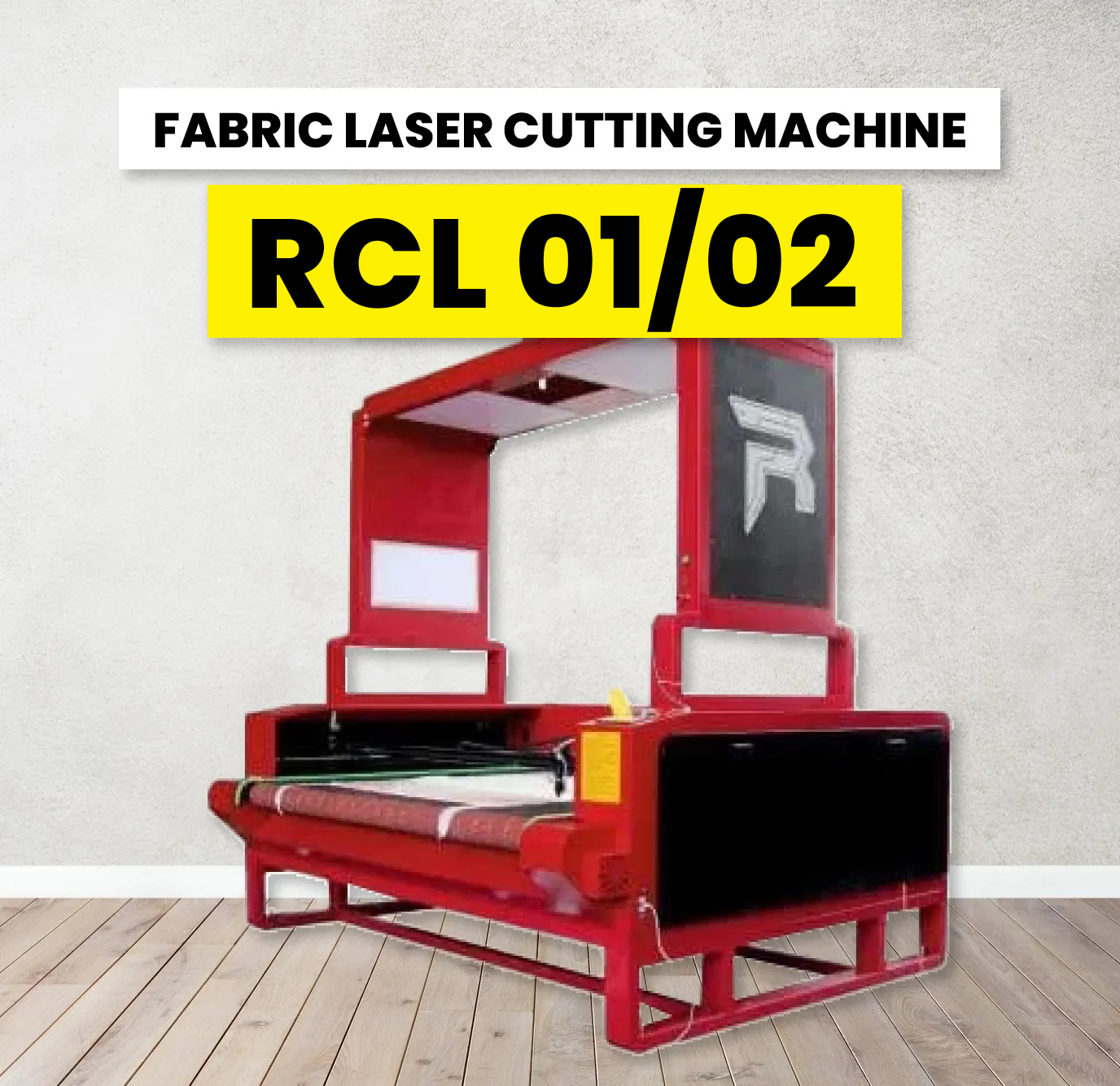
Digital printing businesses seeking unmatched precision will find their match in the RCL 01 and RCL 02 laser cutting machines. You’ll appreciate their impressive 180 x 120 cm cutting area powered by up to 150W laser strength.
Let’s investigate what sets these machines apart. They’ll cut your fabrics accurately even when they’re deformed or have printing errors thanks to the integrated CCD camera system.
You might wonder about stability during cutting. The built-in blower keeps your fabric steady while the motion system maintains ±0.01 mm accuracy.
Moving on to versatility, both models handle all textile types. The RCL-02’s double head design doubles your productivity compared to the single-head RCL-01.
You’ll get peace of mind with free installation and a year of warranty coverage. Their technical team guarantees you’re never left hanging with production issues.
Best For: Digital printing businesses and textile manufacturers requiring precise, automated cutting of various fabric types, especially those handling high-volume production or working with sublimation-printed materials.
Pros:
- Advanced CCD camera system ensures accurate cutting even with deformed fabrics or print misalignments
- Large cutting area (180 x 120 cm) with impressive precision (±0.01 mm accuracy)
- Comprehensive support package including free installation, training, and one-year warranty
Cons:
- Significant initial investment required for professional-grade laser cutting equipment
- Requires dedicated space for installation due to large working area
- May need specialized ventilation system for laser cutting operations
Factors to Consider When Choosing a Fabric Laser Cutting Machine

Investing in the right fabric laser cutting machine can revolutionize your production capabilities and transform your manufacturing process. Beyond the initial price tag lies a world of critical factors that will determine whether your investment becomes a game-changing asset or a costly misstep.
1. Cutting Quality and Precision
In terms of laser cutting fabric, precision and quality should be your top priorities. You’ll want a CO2 laser cutter for textiles that delivers clean, accurate cuts without fraying or scorching.
Your precision fabric cutting needs to be consistent across different materials. Look for machines with adjustable power settings and cutting speeds.
A high-quality laser cutter should maintain precise edge definition within 0.1mm tolerance. That’s about the width of a human hair.
You’ll know you’ve found the right machine when test cuts show smooth edges without discoloration. Watch for systems offering automatic edge detection and material thickness sensing.
The digital design parameters guide the laser beam’s path to ensure intricate patterns and detailed cuts are executed perfectly.
2. Cutting Speed and Production Efficiency
A laser cutter’s speed directly impacts your production output and bottom line. You’ll want to assess machines based on their high-speed fabric cutting capabilities and material handling efficiency.
Today’s automated fabric cutting systems can process up to 1,000 meters per hour. That’s significantly faster than manual cutting methods.
Look for features like automatic material feeding and multi-layer cutting capabilities. These can double or triple your daily output.
You’ll also want to evaluate the machine’s acceleration rates and path optimization. Smart systems automatically calculate the most efficient cutting routes, reducing production time and maximizing your workflow efficiency.
Modern laser cutters deliver precise clean edges while preventing fabric fraying, ensuring consistently high-quality results across all production runs.
3. Ease of Use and Maintenance
While technical specifications matter greatly, the user-friendliness and maintenance requirements of your laser cutter will impact your daily operations.
You’ll want a commercial fabric laser cutter with an intuitive interface that your team can master quickly. Look for touchscreen controls and visual workflow guides.
Regular laser cutting machine maintenance shouldn’t feel like rocket science. Choose models with easily accessible parts and clear maintenance schedules.
Consider machines that offer automated cleaning cycles and self-diagnostic features. These smart functions help prevent downtime.
Your machine’s software should simplify job setup and material management. Modern systems even send maintenance alerts to your phone.
Like sublimation-based printing, laser cutting technology delivers precise and durable results on fabric materials when properly maintained.
Remember to factor in training support and documentation quality when making your choice.
4. Technical Support and After-Sales Service
Technical capabilities mean little without reliable support to back them up. When diving into fabric cutting automation, you’ll want comprehensive after-sales service that keeps your operation running smoothly.
Look for manufacturers offering on-site installation and operator training. You’ll need these essentials in the laser cutting for fashion industry.
Consider providers that include warranty coverage and regular maintenance plans. Think of it as insurance for your investment.
You’ll benefit most from companies providing 24/7 technical support. Quick response times can mean the difference between minor hiccups and costly production delays.
Check if they offer remote diagnostics and troubleshooting. This modern support approach saves valuable downtime.
Similar to digital screen printing businesses, maintaining optimal equipment performance through regular maintenance and technical support is crucial for long-term success.
5. Cost and Return on Investment
Making smart financial decisions starts with understanding the complete cost picture of fabric laser cutters. You’ll need to factor in more than just the initial equipment price.
Consider the total cost of ownership including maintenance, replacement parts, and operator training. Industrial textile equipment requires ongoing investment.
Your return on investment depends on production volume and market demand. Most businesses see ROI within 12-24 months with proper planning.
Don’t forget to account for energy consumption and workspace modifications. You’ll also want to budget for software upgrades and technical support.
Think about scalability – investing in a system that can grow with your business often proves more cost-effective long-term.
While higher upfront costs may seem daunting, modern printing technologies like DTF printing solutions can achieve ROI within 3-6 months through reduced waste and labor costs.
Implementation of Laser Cutting Machines in the Textile Industry
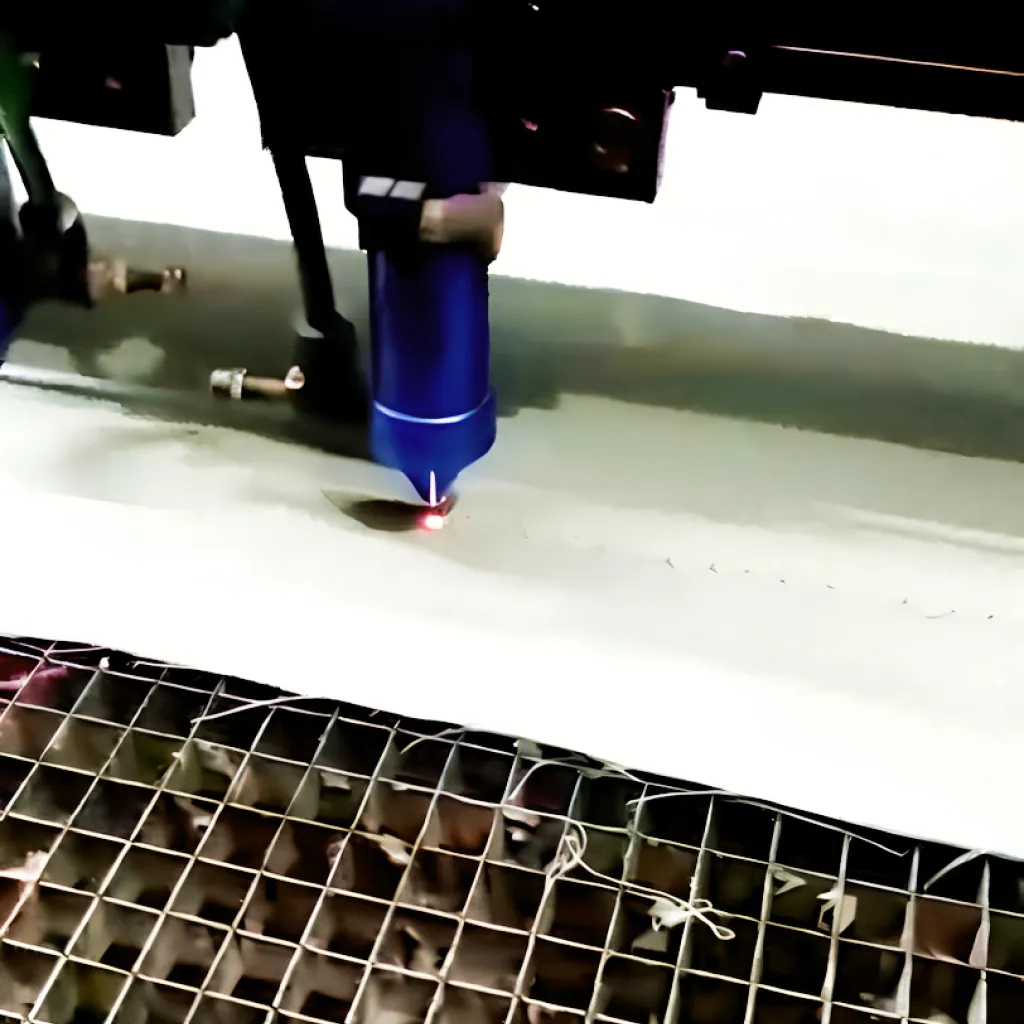
Laser cutting machines have transformed modern textile production by offering unprecedented precision and efficiency. You’ll find this textile manufacturing technology changing production floors across Indonesia.
When you’re ready to implement fabric cutting equipment, start with proper space planning and ventilation. You’ll need adequate room for material handling and safety zones.
Training your operators is essential. You might want to think about partnering with suppliers like Texco that offer comprehensive support and training programs.
Integrate your laser cutter with existing workflow systems. This means connecting it to your design software and establishing quality control checkpoints.
Remember to maintain regular maintenance schedules to guarantee peak performance and longevity.
For optimal results, ensure your fabrics can withstand temperatures between 130°C to 160°C during the cutting process.
Conclusion
Selecting the right laser cutter for fabric stands as a significant investment in your textile operation’s future. The perfect industrial fabric cutter can transform your workflow and boost productivity.
You’ll want to contemplate comprehensive fabric cutting software that integrates seamlessly with your chosen machine. This guarantees maximum efficiency in your daily operations.
In today’s fast-paced textile industry, staying competitive means embracing automation while maintaining quality. Your success depends on making informed decisions about equipment. Consider scheduling a digital printing consultation with industry experts to ensure you’re maximizing your textile cutting investment.
Frequently Asked Questions
Can I Rent a Laser Cutter Before Committing to Purchase?
While Texco doesn’t offer laser cutter rentals, you’ll find value in their free business consultations where you can investigate equipment options and receive hands-on demonstrations before making your investment decision.
What Safety Certifications Should a Textile Laser Cutting Facility Have?
Like a shield of protection, you’ll need ISO 9001 for quality management, OSHA certification for workplace safety, and laser safety certifications (ANSI Z136). Don’t forget local fire safety permits and environmental compliance standards.
How Often Should Laser Cutting Machine Parts Be Replaced?
You’ll need to replace your laser cutter’s mirrors and lenses every 3-6 months, depending on usage. Check belts and filters monthly, and upgrade your exhaust system annually for peak performance and cutting precision.
Are There Eco-Friendly Alternatives to Traditional Laser Cutting Methods?
You’ll find eco-friendly alternatives in water-jet cutting and ultrasonic cutting technologies. These methods don’t produce harmful fumes and use less energy, plus they’re compatible with Oeko-Tex certified sustainable production standards.
Which Materials Are Incompatible With Laser Cutting Technology?
You shouldn’t laser cut PVC, vinyl, or artificial leather as they release toxic chlorine gas. Also avoid materials containing reflective metals, as they’ll damage your machine and potentially create hazardous situations.